
Mike Lehman
Kive AI vs Pikes AI: Best Tool for Product Visuals Compared

E-commerce brands are under more pressure than ever to consistently produce content that converts fast without blowing the budget on studio shoots every quarter. That's why platforms like Kive AI and Pikes AI have become go-to tools for brands and teams trying to scale their visual output with generative AI.
Both tools promise studio-quality product visuals. Both target e-commerce brands. But they are built for very different kinds of teams, and choosing the wrong one can cost you more than just money.
Disclosure: Pikes AI is our product, so treat this as a comparison written by an interested party. Everything below about Kive is sourced to their own pricing page or their public Trustpilot reviews, and linked.
This article breaks down exactly how Kive AI and Pikes compare across seven key areas every e-commerce brand should evaluate before committing.
Overview of Kive AI
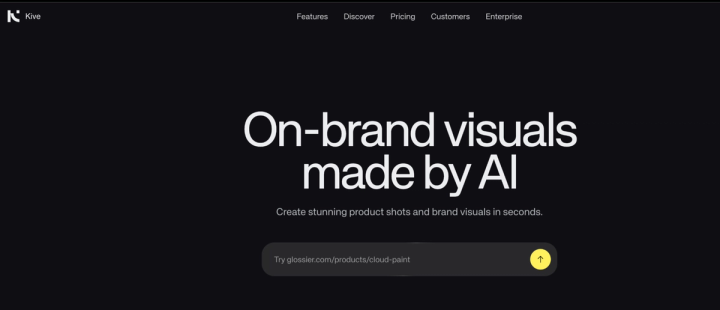
Kive AI is an all-in-one creative platform designed to help brands generate visuals, manage digital assets, and maintain brand consistency across campaigns. It combines AI image and video generation with a built-in asset library, mood board tools, and Studio presets. The visual prompting frameworks allow teams to generate images without writing complex prompts from scratch.
Kive's strongest suit is its asset management layer. If your teams juggles large libraries of product shots, campaign references, and brand files, the ability to generate, organize, and search everything from one workspace will be genuinely useful to you.
Pros
Intuitive interface
- Comprehensive asset library with AI-powered search
- Studio presets for prompt-free image generation
- Video generation with multi-product support
- Built-in team collaboration tools
Cons
- Credit charges apply even when generation fails
- Custom brand model training is only available on Pro ($75/month billed yearly) and above
- Not purpose-built for e-commerce performance marketing
- Customer support has received criticism for being unresponsive to billing issues
Overview of Pikes AI
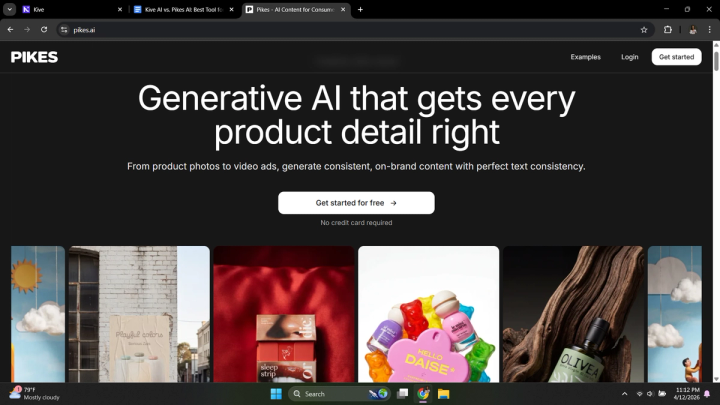
Pikes is a Generative AI platform built specifically for e-commerce brand owners and product marketers. It combines best-in-class image models with best-in-class video models in a single platform, making it the most complete content creation suite available for consumer brands today.
Unlike tools that started as creative platforms and added e-commerce features over time, Pikes was built from the ground up for one purpose: helping brands generate studio-quality product content that drives sales. From product photography and lifestyle images to video ads and performance marketing visuals, every feature on the platform exists to serve that goal. Pikes also has a Claude integration, so brands can use Claude to generate images, as well as Pikes integration.
The platform is currently trusted by over 1000 fast-growing consumer brands.
Pros
- Zero distortion on product labels, logos, and packaging
- Full content suite
- Ready-to-use templates with no prompting required
- Conversational content creation with New Chat Mode that makes it so much easier to use than having to prompt every single image
- AI-powered image generation
- Built-in ad intelligence to search, analyze, and clone top-performing competitor ads
- Free trial available (no credit card required)
- Human customer support team
Minor Limitations
Pikes is purpose-built for e-commerce, so if your use case is broader creative production or general-purpose design work, the platform's focused feature set may feel narrow. It also does not offer the kind of deep asset management library that Kive provides for large creative teams managing thousands of unrelated files.
Head-to-Head Comparison: Kive AI vs. Pikes AI
Output Quality
The most important measure for any product content tool is simple: does your product look right in the final output? For e-commerce brands, that means labels stay readable, logos aren't warped, colors match the original product, and the image could realistically appear in a paid ad or on a product listing page.
Kive AI delivers strong results for lifestyle and scene-based imagery. Its Studio presets make it easy to place products in well-lit environments, and the platform supports multi-product shots.
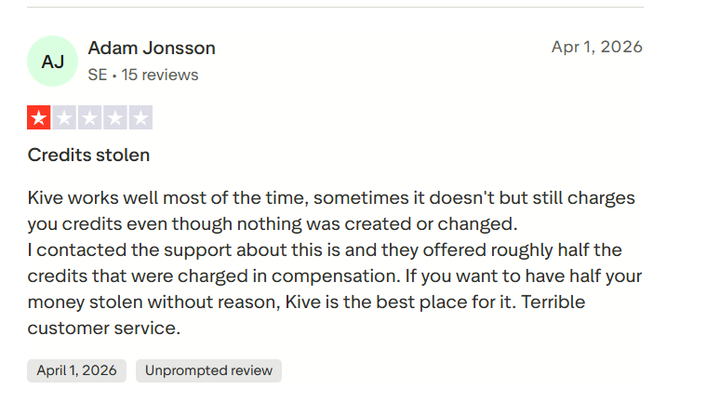
The most consistent criticism of Kive in its public reviews is around credit usage. Multiple Trustpilot reviewers report credits being deducted for generations that failed or that they had not requested. At volume that is a cost-predictability question worth testing during a trial, rather than a verdict on output quality.
Set against that, Kive's overall Trustpilot average is 2.8 out of 5 across 27 reviews and the positive reviews are substantive — several brand owners report excellent output, with one noting quality improves markedly when you prompt with the product's real-world dimensions.
Pikes AI, on the other hand, was engineered specifically to preserve product accuracy. Labels stay intact, your packaging isn't distorted, and the text on your product remains readable. The platform uses a proprietary model that ensures your product looks exactly like your product. For brands running paid ads or listing products on Amazon, Walmart, or Shopify, that level of fidelity is non-negotiable.
Use Cases
Kive AI covers a wide creative surface. Beyond product photography, it functions as a digital asset management tool and creative collaboration hub. For in-house creative teams that need to manage large libraries of campaign assets alongside generation tools, that breadth has real value.
For e-commerce brands specifically, however, Kive's generalist positioning means certain high-priority use cases like generating performance marketing visuals for Meta ads or discovering what competitor ads are performing best right now simply aren't covered.
Pikes AI was built around exactly those use cases. You can generate product images, animate them into video ads, create UGC-style content, and build full performance marketing visuals all in one platform.
There's also a dedicated ad intelligence feature: an in-platform search bar that lets you find the best-performing competitor ads across the web, then clone the creative style directly in Pikes. For a $10M+ brand running consistent paid campaigns, that's a compounding advantage that compounds every single week.
Ease of Use
Kive's interface is clean and well-designed. The Studio preset system removes the burden of prompt engineering for image generation, which makes it accessible to non-technical users. That said, for teams new to AI content tools, navigating the combination of asset library, generation tools, and collaboration features can require a learning curve.
Meanwhile, Pikes AI recently launched Chat Mode, which is a major shift in how the platform works. Instead of configuring settings and writing prompts for every image, you simply describe what you want in a conversation, and Pikes generates it. It removes friction entirely and makes the platform usable by anyone on your team, regardless of their technical background.
Pikes also provides a full library of ready-to-use templates for product visuals. It doesn’t require prompting or setup. Just select a template, upload your product, and generate. For brand teams that need to move fast, that's not a minor feature; it's a daily time-saver.
Performance Marketing Capabilities
This is where the two platforms diverge most sharply.
Kive AI is a creative and asset management platform. It doesn't have built-in tools for ad creation, competitor ad research, or performance marketing workflows. If you're a brand running Meta campaigns and need to consistently produce fresh ad creatives, Kive can only get you halfway there. You can only generate visuals, but the rest of the workflow happens outside the platform.
Pikes AI is designed to close that loop. You can generate product images, turn them into video ads, build Meta-ready creatives, and use the ad intelligence search bar to identify what's working in your category right now. You're creating content informed by what's converting across your competitors' campaigns. That's a different level of capability entirely.
Pricing Structure
Kive AI's pricing is tiered across Free, Basic ($15/month billed yearly, $20 billed monthly), Pro ($75/month billed yearly, $100 billed monthly), and Enterprise (custom).
The Pro plan, which includes brand model training and higher usage limits, requires a $75/month annual commitment. Credits don't roll over, and as multiple users report, failed generations still consume credits without guaranteed full refunds.

Pikes AI offers a Free trial (no credit card required), followed by Starter ($40.83/month), Growth ($49.5/month), and Pro ($149.5/month) plans, at annual plans. Each tier allows 325, 1,000, and 3,000 brand asset generations, respectively.
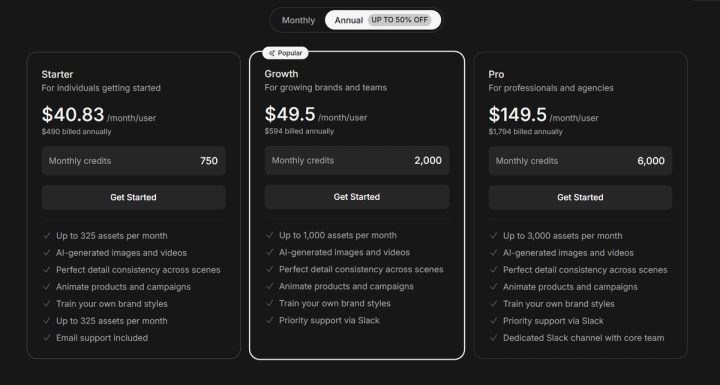
Unlimited projects and cloud storage are included across all paid plans. The value-to-cost comparison here goes beyond generation volume. Every asset produced is professional-grade, on-brand, and ready to deploy across any channel.
AI Model Depth
Both platforms use AI models for image and video generation, but the depth of integration differs significantly.
Kive integrates multiple external video models, including Google Veo 3 and Kling, which give users access to capable generation engines. The asset library adds useful context by keeping generated content searchable and organized alongside other brand files.
Pikes AI has taken a different approach: rather than stitching together third-party models, it has built a platform that combines best-in-class image models and best-in-class video models in a single unified workflow optimized for product content. It also recently added a Claude AI integration, meaning brands can use Claude's capabilities directly within Pikes to generate and refine images. This allows you to use powerful AI reasoning in your creative process in a way no other product photography platform currently offers.
Customer Support
Reliable support matters when you're running campaigns on tight timelines and something breaks.
Kive's support has drawn criticism on Trustpilot, with multiple users reporting issues around billing disputes and credit deductions for failed outputs. Their overall rating there is 2.8 out of 5 across 27 reviews, which includes a substantial number of 5-star reviews.
Pikes AI has a dedicated human customer support team that responds to inquiries, complaints, and requests via email. For brands that rely on this platform for daily content production, knowing there's a real person behind the support channel is worth more than it might seem.
Why Kive AI May Not Be the Right Fit for Fast-Growing E-commerce Brands
Kive AI is a genuinely capable tool. Its Studio presets, asset library, and multi-product shot functionality make it a strong option for creative agencies, in-house design teams, and brands that need a centralized hub for managing large volumes of unrelated visual assets.
But if you’re an e-commerce brand that needs to produce a consistent pipeline of product content, ad creatives, and video assets that are on-brand and directly tied to performance, Kive's generalist architecture introduces gaps that compound over time.
Some of the key limitations for e-commerce brands specifically:
- No ad intelligence layer: Kive helps you create visuals, but it doesn't tell you what visual formats are performing in your category right now.
- Brand model training locked to higher tiers: On the Basic plan, custom model training isn't available. For brands that need consistent product representation across every piece of content, this is a ceiling that shows up quickly.
- Credit deductions on failed outputs: Multiple users report losing credits on generations that didn't produce usable results, with inconsistent compensation offered by support. At volume, this adds up.
- Not built for video ads: Kive supports video generation, but it isn't built around the specific workflow of creating and testing performance marketing video creatives for Meta and other ad platforms.
Why Pikes AI Is Built for E-commerce Brands at Scale
Pikes AI was designed specifically for the content demands of fast-growing consumer brands. It doesn't ask you to adapt your workflow to the tool; it was built around the workflow you already have.
Here's what sets it apart for serious e-commerce teams:
- Zero label or packaging distortion: Your product looks exactly like your product in every generated image. No alien text. No warped logos. No color drift. This is foundational for any brand running product listings or paid ads.
- Chat Mode: Describe what you want in plain language. You don’t even need prompt engineering skills. Just tell Pikes what you need, and it generates it. This makes the entire platform accessible to every member of your team.
- Ready-to-use templates: A full library of production-ready templates for product visuals means you can generate high-quality content without ever opening a prompt box. Select, upload, generate.
- Performance marketing visuals: Pikes generates not just product photography but full ad creatives for Meta and other platforms. Everything from static product ads to video creatives is built for performance.
- Ad intelligence: The in-platform ad search bar lets you find the best-performing competitor ads in your category right now. Analyze what's working, then clone the creative approach directly in Pikes. It's the only product content platform that connects competitive intelligence to creative execution in one workflow.
- Claude AI integration: Brands can use Claude directly within Pikes to generate and refine images. This way, you’re bringing the most capable AI reasoning model into your product photography workflow.
- Best-in-class image and video in one platform: You don't need a separate tool for video ads, a separate tool for product photography, and another tool for UGC. Pikes covers all of it, with models that are the best available for each content type.
Which Tool Is Right for Your Brand?
If you're a creative agency or a large in-house team that needs a powerful asset management layer alongside generation tools, and your use case spans well beyond e-commerce product content, Kive AI is worth evaluating.
But if you're an e-commerce brand that needs to produce studio-quality product images, performance marketing creatives, video ads, and UGC content consistently and at scale, and you need every output to be on-brand and deploy-ready, Pikes is the clear choice.
It was built for exactly this. And the brands using it are producing the kind of content that actually moves product.
Frequently Asked Questions
What is the main difference between Kive AI and Pikes AI?
Kive AI is a general-purpose creative platform that combines AI image and video generation with digital asset management tools. Pikes AI is purpose-built for e-commerce brands, with a full content suite that covers product photography, video ads, UGC creation, and performance marketing visuals.
Does Pikes AI distort product labels or packaging?
No. One of Pikes AI's core technical differentiators is its ability to preserve product labels, logos, text, and packaging without distortion. Your product looks exactly like your product in every generated image, which is critical for product listings, paid ads, and branded content.
Can Pikes AI generate video ads?
Yes. Pikes AI supports full video generation, including product image animation, video ad creation, and UGC-style video content. It combines best-in-class image models with best-in-class video models in a single platform.
Does Kive AI offer brand model training on all plans?
No. Custom brand model training on Kive AI is only available on the Pro plan ($75/month billed yearly) and above. On the Basic plan, this feature is not available.
Which platform is better for Meta ad creatives?
Pikes AI. It is specifically designed to generate performance marketing visuals for Meta and other ad platforms, and includes an in-platform ad intelligence tool for researching and cloning top-performing competitor ad creatives. Kive AI does not offer equivalent ad-specific workflow features.

Written by
Mike Lehman
Mike Lehman is a senior content strategist at Pikes. Before joining Pikes, Mike spent nearly a decade working with Glossier, Haus, and Athletic Brewing, leading campaigns that blended storytelling and data.