

Mike Lehman
Claude vs ChatGPT vs Gemini for Product Image Generation: Which AI Tool is Better?
Before now, creating product content usually meant expensive photoshoots, long editing cycles, and a lot of back and forth. Things have changed now with AI tools completely changing the process. Brands can generate lifestyle product images, ad creatives, social content, and even short videos in minutes instead of weeks.
The big question now is: which AI tool is actually best for product image generation?
ChatGPT has become popular for image creation. Gemini is pushing hard into AI image editing. On the other hand, Claude is known more for reasoning and creative thinking than visuals. However, once Claude is connected to Pikes MCP, it can generate images at a scale.
In this guide, we will take a practical look at all three tools from an e-commerce perspective. Not just who can generate pretty images, but which one actually helps brands create better product-focused content faster, easier, and at scale.
Claude, ChatGPT, and Gemini: Quick Comparison
Before diving deeper, here’s a quick overview of how the three tools compare specifically for product image generation and e-commerce creative work.
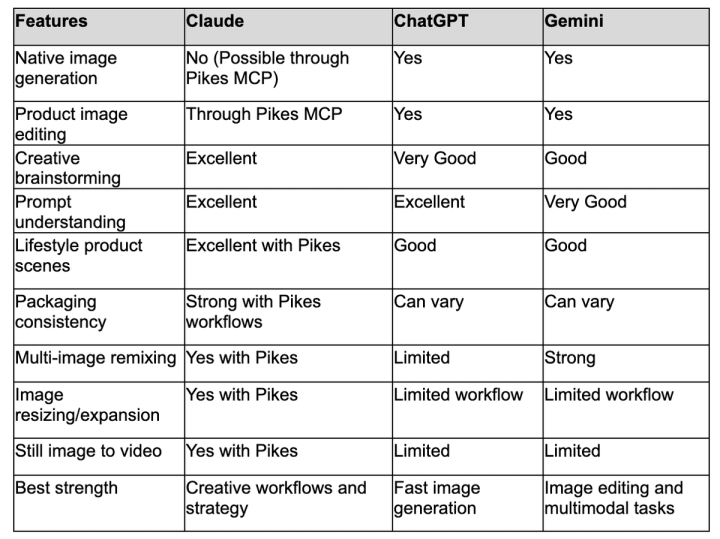
At first glance, ChatGPT and Gemini may seem ahead because both can generate images natively. You type a prompt, and they create an image directly inside the conversation.
However, Claude works differently. On its own, Claude is not designed as a native product image generator.
Anthropic mainly built it for reasoning, writing, analysis, planning, and conversational workflows. But once connected to Pikes MCP, Claude becomes much more powerful for e-commerce creative production.
That’s because the experience shifts from “generate one image” to managing an entire creative workflow inside a conversation.
What Makes a Good AI Tool for Product Image Generation?
Not every AI image tool is built for e-commerce. Some are great at creating artistic visuals but struggle with product accuracy. Others can generate impressive scenes but fail to keep packaging details consistent.
For consumer brands, a good AI product image tool needs to do more than just create attractive pictures. It needs to help produce content that actually works for ads, marketplaces, websites, and social campaigns.
Here are some of the biggest things that matter.
1. Product Accuracy
This is one of the most important factors for e-commerce brands.
An AI-generated image may look beautiful at first glance, but if the packaging shape changes, the labels become distorted, or the product colors look inaccurate, and the content quickly becomes unusable.
Good product image tools should preserve packaging details, logos, label text, product proportions, and brand colors. This matters especially for consumer brands where consistency directly affects trust and conversions.
2. Realistic Lighting and Environments
One thing AI still struggles with sometimes is realism. The best product visuals usually have believable lighting, natural shadows, realistic reflections, and environments that match the product properly.
A skincare product in a luxury bathroom scene should feel natural. A protein shake in a gym setup should match the atmosphere and lighting of the environment. If you don't have that and the lighting looks fake or disconnected from the product, customers notice immediately.
3. Strong Editing Capabilities
Most brands already have product photos they want to improve or reuse. A strong AI workflow should allow brands to swap backgrounds, add props, place products into lifestyle scenes, remove unwanted objects, and more.
4. Brand Consistency
Generating one good image is easy. Generating 50 visuals that still feel like the same brand is much harder. Good AI tools should help maintain a consistent visual identity across campaigns, marketplaces, social posts, and ads.
5. Speed and Ease of Use
A powerful tool that takes hours to learn usually slows teams down. One reason AI content generation is growing so quickly is because brands want faster workflows. The best systems allow marketers and founders to create high-quality content through simple prompts and natural conversation instead of complicated editing software.
6. Video Generation Capabilities
Short-form video is now a major part of e-commerce marketing. Brands increasingly need:
- TikTok videos
- Instagram Reels
- Story ads
- animated product reveals
- motion graphics
AI tools that can turn still product images into videos give brands much more content flexibility without requiring full production shoots.
ChatGPT for Product Image Generation
ChatGPT has quickly become one of the most popular AI tools for image generation, especially since OpenAI introduced advanced multimodal image capabilities into the platform. For many people, it’s now the first AI tool they test when creating marketing visuals, social media graphics, or product concepts.
And to be fair, it does a lot well.
What ChatGPT Does Well
One of ChatGPT’s biggest strengths is how naturally it understands prompts.
You can describe scenes conversationally without needing overly technical wording. That makes it approachable for marketers, founders, and e-commerce teams that may not have deep design experience.
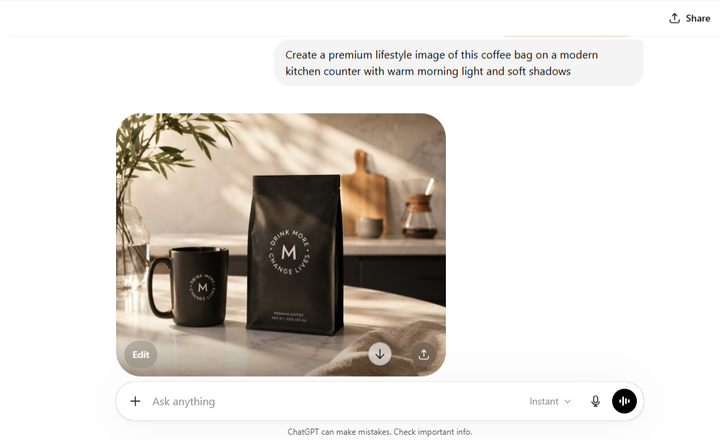
For example, you could prompt ChatGPT with:
“Create a premium lifestyle image of this coffee bag on a modern kitchen counter with warm morning light and soft shadows.”
And it will usually understand the direction immediately.
ChatGPT is also strong at:
- generating visually appealing scenes
- understanding aesthetic styles
- creating polished concept images
- following creative instructions closely
- generating images with readable text more accurately than many earlier AI models
This makes it useful for:
- social media creatives
- quick campaign mockups
- ad inspiration
- mood boards
- product launch concepts
- basic lifestyle product scenes
Another advantage is accessibility. The workflow feels simple. You chat naturally, upload reference images if needed, and iterate through ideas conversationally.
For solo founders and small creative teams, that ease of use is a major reason ChatGPT became popular so quickly.
Where ChatGPT Falls Short for E-commerce Product Workflows
The challenge is that generating attractive images and generating production-ready e-commerce content are not always the same thing.
ChatGPT works well for general creative generation, but product-focused workflows can still become inconsistent depending on the complexity of the task.
For example, brands sometimes run into issues like:
- packaging details changing between generations
- labels looking slightly distorted
- inconsistent product placement
- visual identity shifting across multiple creatives
- difficulty maintaining the same product accuracy at scale
This becomes more noticeable when brands need large volumes of consistent product content.
Another limitation is workflow depth.
While ChatGPT can generate and edit images, it isn’t specifically built around the broader e-commerce creative pipeline. Brands may still need extra tools for:
- structured campaign planning
- advanced product remixing
- marketplace resizing workflows
- turning still product images into cinematic short videos
- scaling one product photo into dozens of campaign variations systematically
So while ChatGPT is impressive for general AI image generation, many consumer brands eventually start looking for more specialized workflows once their creative needs become larger and more product-focused.
Gemini for Product Image Generation

Google has pushed Gemini heavily into the AI image generation space, especially with its newer multimodal capabilities and image editing features. Compared to earlier AI tools, Gemini feels much more visual-first now, which makes it appealing for marketers and creative teams working with product content.
And in some areas, it’s genuinely impressive.
What Gemini Does Well
One of Gemini’s biggest strengths is image editing and transformation.
It handles tasks like background swaps, object removal, scene changes, multi-image blending, and prompt-based edits surprisingly well.
For example, let’s use the same prompt we earlier used for ChatGPT, and see what Gemini produces:
“Create a premium lifestyle image of this coffee bag on a modern kitchen counter with warm morning light and soft shadows.”

Gemini is also strong at understanding the context between multiple uploaded images. This makes it useful for remixing concepts or combining products with lifestyle environments.
Another advantage is that Gemini feels flexible for general-purpose creativity. It can move between:
- writing
- image generation
- editing
- brainstorming
- multimodal tasks
- without much friction.
Where Gemini Falls Short for E-commerce Product Workflows
The challenge, again, comes down to specialization.
Gemini is a powerful general AI system, but it isn’t deeply focused on e-commerce product production workflows specifically.
For consumer brands, consistency matters just as much as creativity. And like many AI image tools, Gemini can sometimes struggle when brands need:
- highly accurate packaging reproduction
- repeatable product consistency across campaigns
- structured multi-platform creative workflows
- scalable ad variation systems
The outputs may look visually impressive, but still require extra refinement before becoming production-ready for serious advertising campaigns or marketplace use.
In other words, Gemini is excellent as a flexible AI creative tool. But for growing e-commerce brands producing high volumes of product-focused content, teams may eventually want something built more intentionally around that workflow.
Claude for Product Image Generation

At first glance, Claude may seem like the odd one out in this comparison.
Unlike ChatGPT and Gemini, Claude does not natively generate full product images by itself. Anthropic mainly designed Claude for reasoning, writing, planning, analysis, and conversational problem-solving rather than standalone visual generation.
So if someone only looks at native image creation, Claude initially appears behind the others.
But that’s not the full story.
Claude’s Biggest Strength Isn’t Raw Image Generation
Claude shines in a different area entirely: creative thinking and workflow intelligence.
It’s extremely strong at:
- refining vague ideas
- building detailed prompts
- brainstorming campaigns
- organizing creative direction
- improving product messaging
- understanding brand positioning
- planning content workflows
For e-commerce brands, that matters more than many people expect.
Where Claude Changes Completely: Pikes MCP
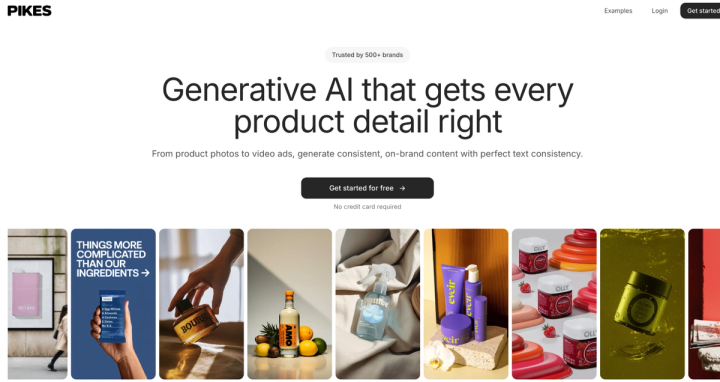
On its own, Claude is not a full product image generator.
But once connected to Pikes MCP, the experience changes dramatically.
Pikes adds the entire visual production layer directly into Claude. With this tool integrated into Claude, brands can:
- generate product images
- edit existing photos
- remix products into lifestyle scenes
- resize creatives for different platforms
- animate still images into videos
all through natural conversation. This creates a very different type of workflow compared to traditional AI image tools. Instead of simply prompting: “Generate image.”
Brands can now:
- brainstorm campaign concepts with Claude
- refine the visual direction
- generate product creatives through Pikes
- edit and expand assets
- create platform-specific versions
- animate winning creatives into video
inside the same conversation thread.
That’s a major advantage for e-commerce teams producing large amounts of content constantly.
Why Claude Becomes Better with Pikes MCP
This is the point where the comparison starts becoming much less about “which AI can generate images” and much more about which workflow actually works better for e-commerce brands.
On its own, Claude is already excellent at creative thinking, planning, and prompt refinement. But once connected to Pikes MCP, it gains the missing piece: full product image and video generation capabilities directly inside the conversation.
So, instead of treating image generation as a separate task inside another tool, Claude and Pikes turn the entire creative process into one connected workflow.
For example, a supplement brand could start by asking Claude: “Help me come up with three premium campaign directions for a new beverage launch.”
Claude can brainstorm:
- luxury beverage aesthetics
- beverage branding
- High-end performance-focused visuals
Then the brand can immediately continue with:
“Generate the luxury beverage version with cinematic lighting and silk background.”
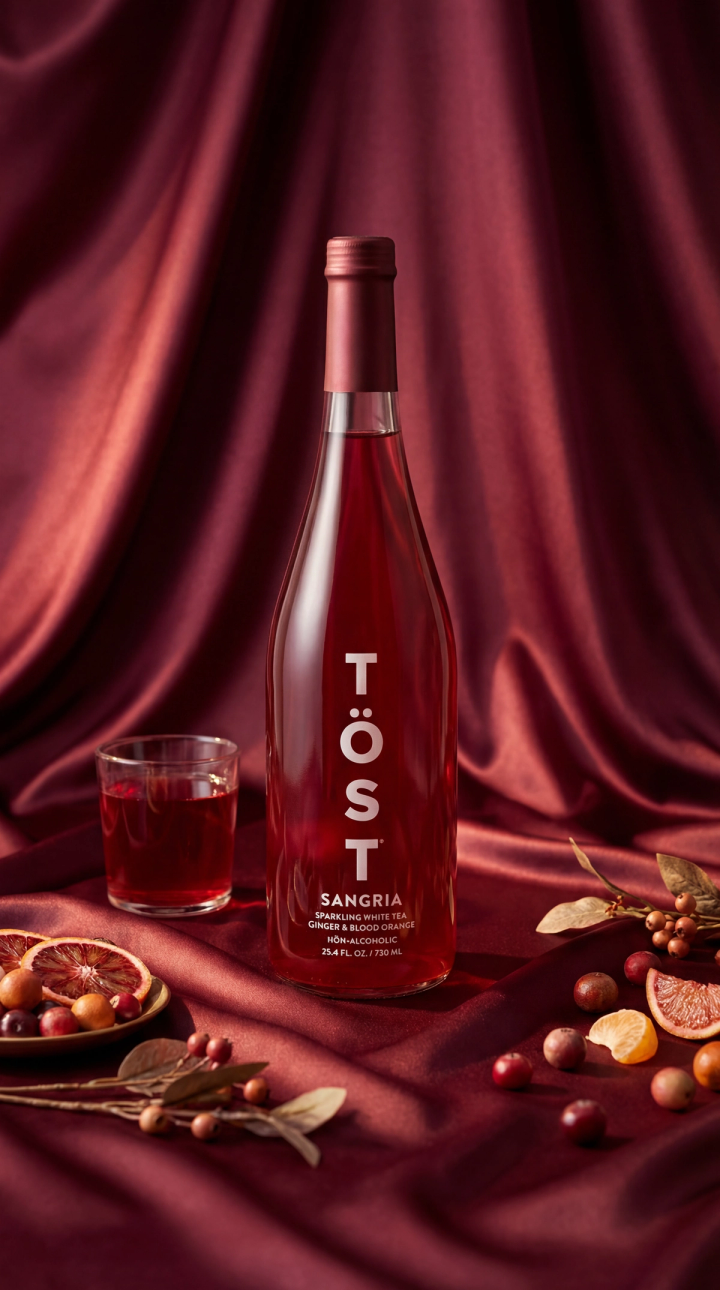
And Pikes creates the image directly through the same conversation.
That workflow feels much more natural than jumping between brainstorming tools, design apps, and editing platforms separately.
Pikes Adds the Missing Visual Layer
Pikes essentially transforms Claude into a full e-commerce creative studio.
With Pikes connected, brands can:
- generate lifestyle product images
- edit existing product photos
- remix products into new scenes
- expand images into different aspect ratios
- animate still images into short videos
- create assets for Amazon, Shopify, TikTok, Meta ads, and more
And the process still feels conversational the entire time.
Better for Existing Product Photos
Another huge advantage is how well the workflow fits real e-commerce operations.
Most consumer brands already have existing SKU photos, packaging shots, and campaign assets. They don’t always want to generate random visuals from scratch.
With Pikes inside Claude, brands can:
- upload existing product images
- place them into lifestyle environments
- create seasonal variations
- change lighting and mood
- resize for different placements
- turn stills into motion content
For example, here’s a lifestyle image of our beverage product:

Easier for Non-Design Teams
And then, there is accessibility. Many growing e-commerce brands don’t have large in-house creative teams. Sometimes, it’s just founders, marketers, or small content teams trying to produce enough assets quickly.
The conversational workflow lowers the barrier significantly.
You don’t need advanced editing skills. You don’t need to understand complicated AI model settings. You simply describe what you want naturally, and Pikes handles the technical generation underneath.
Even better, Pikes automatically selects the right AI models for the task being performed, whether that’s image generation, editing, remixing, expansion, or animation.
That simplicity is one of the reasons the Claude + Pikes combination feels much more practical for real-world e-commerce workflows than many standalone AI image tools today.
Final Verdict
ChatGPT, Gemini, and Claude are all powerful AI tools. But they shine in different ways when it comes to product image generation for e-commerce brands.
ChatGPT is excellent for fast visual creation and creative experimentation. Gemini stands out for image editing and multimodal flexibility. Both tools can generate strong-looking visuals directly from prompts and are useful for marketers exploring AI-powered creative work.
But once e-commerce workflows become more demanding, that’s where Claude + Pikes becomes especially powerful.
Claude brings strategic and creative intelligence. Pikes brings the image generation, editing, remixing, expansion, and animation capabilities. Together, they create a workflow that feels much more tailored for modern consumer brands producing content across multiple channels constantly.
Instead of simply generating images, the system helps brands think through campaigns, refine creative direction, and turn ideas into production-ready assets inside one connected workflow.
FAQs
Can Claude generate product images by itself?
Not natively. Claude is primarily designed for reasoning, writing, planning, and conversation. However, when connected to Pikes MCP, it gains full product image and video generation capabilities directly inside the workflow.
Is ChatGPT good for product image generation?
Yes. ChatGPT is very good for generating creative visuals, lifestyle scenes, and concept images. It’s especially useful for quick content creation and brainstorming.
Is Gemini better than ChatGPT for image editing?
In many cases, Gemini performs strongly for image editing tasks like background replacement, object removal, and multi-image editing. Both tools are capable, but Gemini has become particularly strong in multimodal editing workflows.
Can Claude + Pikes create videos too?
Yes. Pikes allows brands to animate still product images into short-form video content suitable for TikTok, Instagram Reels, Story ads, and other motion-based campaigns.
Which AI tool is best for e-commerce brands?
It depends on the workflow.
- ChatGPT is excellent for general AI image generation.
- Gemini is strong for editing and multimodal tasks.
- Claude + Pikes is often the strongest option for brands focused on scalable product-content workflows and e-commerce creative production.

Written by
Mike Lehman
Mike Lehman is a senior content strategist at Pikes. Before joining Pikes, Mike spent nearly a decade working with Glossier, Haus, and Athletic Brewing, leading campaigns that blended storytelling and data.