
Mike Lehman
The ROI of AI Product Photography: Cost Savings & Efficiency Gains

According to a report by ElectroiQ, 67% of online buyers rank product image quality as the most important factor they consider when shopping. Larger and higher-quality images also saw sales increase by 9.46%. These verified statistics show the immense value of product images and how they directly impact revenue.
Like marketing budgets, most e-commerce brand managers set large funds aside for traditional product photography in a bid to increase conversion rates. While this has been successful, a closer look at sales records shows a high revenue flow but low profitability.
As traditional photography methods become more difficult to upscale with larger inventories, brands switch to AI product photography to save costs and increase efficiency. The results are more product photography savings, increased ROI, and faster campaign execution.
This article exposes the gap in AI vs traditional photography cost and how it greatly impacts ROI for e-commerce brands.
The True Cost of Traditional Product Photography
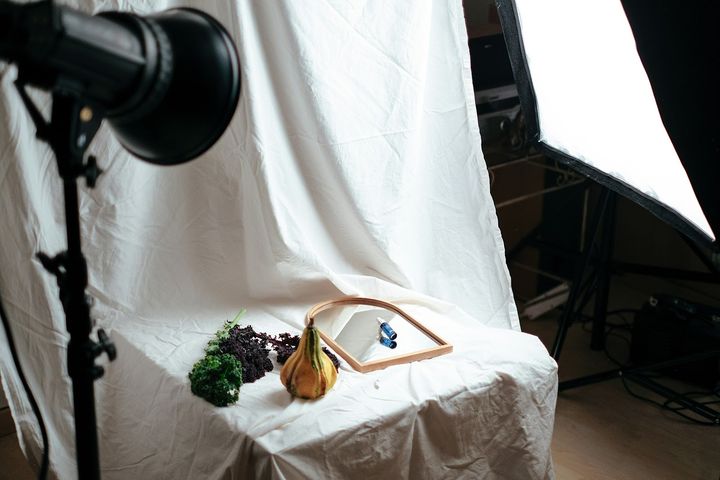
Traditional product photography is far from easy. Either you or your team members are getting drowned in product logistics, conceptualizing product shots, reviewing first drafts, managing vendors, and negotiating payments. The cost can be a huge one, especially if you are a small team or just starting.
A typical traditional product photography session entails:
Sourcing experienced vendors and negotiating payments
Finding the best professionals who can deliver results (whether they are product photographers, models, or makeup artists) can be overwhelming. Estimating and calculating different per-hour, per-image, or per-session pricings to find which fits your budget requires patience, a level of experience, and negotiating skills that are above par.
The average pricing model for traditional product photography in the U.S. is shown below. This breakdown estimates the average cost for one image in traditional product photography to be $85. Except for high-margin products, the cost of investment offsets the gains and results in a poor ROI.
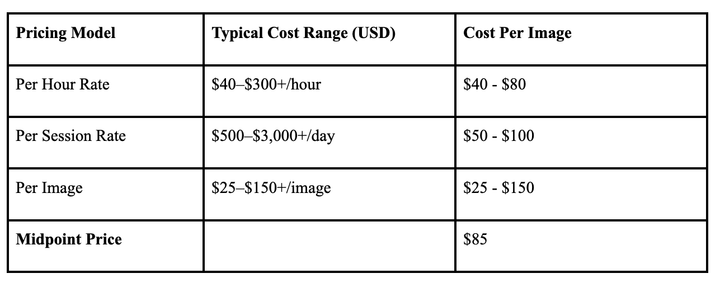
Average Cost Of Traditional Product Photography
Equipment renting and studio setup/location leasing
Some product shots require complex setups, extra lighting, and special props. E-commerce managers bear the brunt of the costs, which can run from $50 to $300 in common marketplaces. For outdoor shoots, finding a location with minimal distractions and perfect weather conditions requires more planning and extra props. Renting a studio that has the aesthetics and ample space for setup may cost you more for larger catalogs.
Reviewing final drafts
Most photographers require you to wait for 1-4 weeks before sending in your edited images. Manually verifying and correcting the photos to ensure they align with your brand standards may involve some back-and-forths and may slow down urgent campaigns.
The true cost of traditional product photography isn’t just what brands pay per shoot. It's the hidden costs, such as scheduling delays, reshoots, limited scalability, and the inability to quickly iterate creative variations. As e-commerce operations grow, this fixed-cost model becomes increasingly difficult to justify, which is why many brands are now evaluating alternatives like AI product photography that offer faster iteration, lower marginal costs, and a far stronger ROI.
AI Product Photography Cost Breakdown
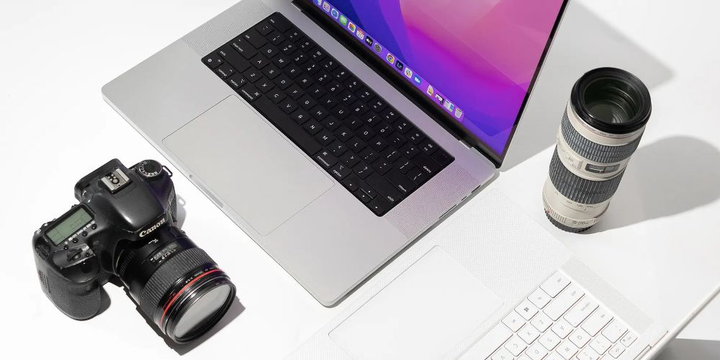
Estimating the cost of traditional product photography reveals the hidden gaps and profit misalignment that most e-commerce brand managers are afraid to admit. However, AI product photography presents a faster and cheaper alternative to traditional product photography while retaining the quality and creativity of the latter.
Gen-AI tools run on three kinds of pricing models:
- Subscription plans
- Credit packs (pay-as-you-use)
- Package pricing
Here’s a typical AI product photography cost for each model:
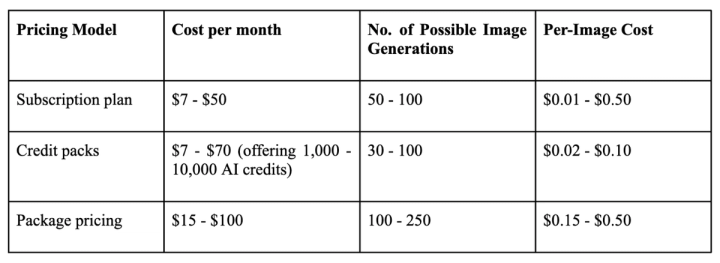
Average Cost Of AI Product Photography
Comparing AI product photography cost with traditional means shows how profitable the former is. One product image shot by a professional product photographer can cost between $50 to $500. The same image can be generated with AI for as low as $0.1.
However, beyond the cost-saving benefits, AI offers more benefits that are impossible with traditional product photography.
Time Savings Analysis
AI drastically cuts down production time by 95%. The timeline for a traditional product photography session is as follows:
- Vendor sourcing and negotiating: 1-3 days.
- Creative concepting: 1-7 days.
- Product shoot: 1-2 days.
- Editing and retouching: 3-14 days
Traditional product photography typically takes 6 days to 3 weeks from sourcing to post-production. AI product images, however, can be generated in 10 minutes to 1 hour with one click. Here is a typical process:
- Prompt generation: 5 - 30 minutes
- Image generation: 2 - 5 minutes
- Editing and regeneration (optional): 20 - 30 minutes
This production cycle reduces lead time from weeks to minutes, allowing teams to execute projects in time and meet revenue targets faster.
Scalability Benefits
As cost increases with the volume of products in a traditional product photography setting, so does the timeline. If the cost of 1 product shoot is $500 and takes 1 day to shoot and edit, 30 products will cost $15,000 and may span 10-20 days. This is highly unscalable for brands with large inventories and a need to constantly execute marketing campaigns.
GenAI product photography platforms, however, offer a more scalable process for bulk generation. Tools like Pikes allow users to edit and generate multiple images at once, saving time and reducing effort. Most AI product photography tools also provide API access to enterprise and agency owners with large inventories. This optimizes workflow, ensuring creativity is preserved and consistent. Also, a single image can be automatically formatted to fit into different platforms (Amazon, Instagram) without the need for a reshoot, thereby saving costs.
With AI, teams enjoy high product photography savings by cutting costs and preventing the need for reshoots.
Quality Comparison
AI can produce professional product images with the same quality as traditional shoots, but much more, with greater flexibility. You can change lighting intensity, product location, image tone, background setting, and model skin color with just one prompt. Creative shots that require complex setups and expensive elements can also be generated in a few minutes with AI.
AI product photography tools also have a powerful image consistency ability. Unlike traditional methods that produce the common "visual drifting" with bulk photo shoots, good generative AI tools ensure perfect uniformity in lighting, style, and angles across thousands of images.
These simple improvements in product image quality help e-commerce brands improve their customer experience, reduce return rates, and scale revenue.
ROI Calculator: AI vs. Traditional Product Photography Cost (With Example)
Calculating and comparing the cost of traditional product photography and AI helps you determine which has the most cost-saving potential for your brand.
Generally, in marketing, ROI is calculated as:
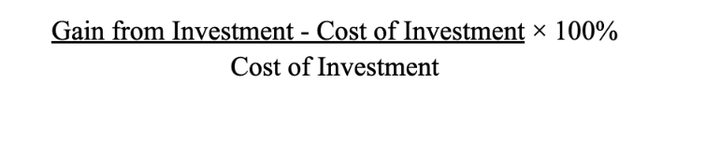
In product photography, to determine the ROI from either method, we’ll use this formula below:

Below is a practical example:
A skincare product costs $100 and has an overhead profit of $25. Every month, 1000 units are sold across social media and Amazon.
The seller makes a net profit of $25 × 1000 = $25,000 per month.
With high-quality creative images, sales have the potential to increase by 30%, according to statistics by Shopify.
A 30% increase in sales means 1,300 units and a $32,500 profit recorded.
The increase in profit is $32,500 - $25,000 = $7,500.
Let's assume the seller pays $2,000 for a traditional product shot.
Using the formula above, the ROI on traditional product photography will be:
($7,500 - $2,000)/$2,000 × 100% = 275% ROI
If we use an AI product photography tool that costs $50/month, the ROI will be:
($7,500 - $50)/$50 × 100% = 14,900% ROI
Based on this example, it is clear which product photography method offers the highest ROI:
- Traditional photography ROI: 275%
- AI photography ROI: 14,900%
These numbers show how traditional photography incurs higher costs and lower ROI compared to AI product photography, which distributes costs across hundreds or thousands of images. As a result, AI product photography ROI commonly exceeds 1,000% and can reach tens of thousands of percent at scale, making it one of the highest-ROI tools available to modern e-commerce brands.
The Best AI Product Photography Tool for E-commerce Brands: Pikes
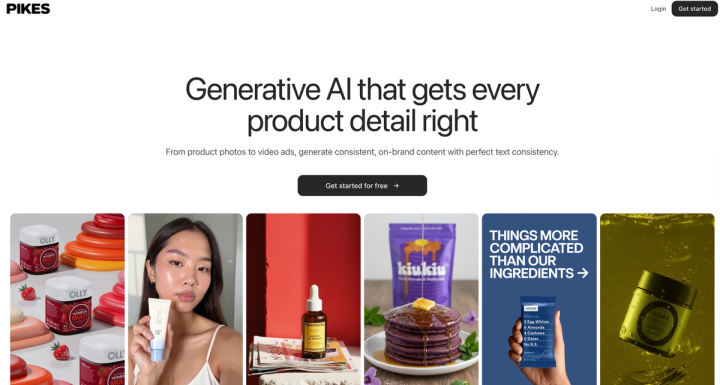
Getting the most ROI from AI product photography starts with selecting a tool that combines high-quality image generation with perfect detail consistency. Pikes excel in both ways and offer a comprehensive toolkit for all kinds of content generation for e-commerce brands.
With Pikes, you can generate:
- Studio-quality product photos.
- Lifestyle images.
- Creative content for ads, social media, and marketplaces.
Try Pikes today for free to access the platform's powerful GenAI features and scale your brand's ROI.
FAQs
Is AI taking over product photography?
AI is gradually dominating the product photography landscape, with 70% of marketers utilizing AI tools for visual production tasks like model imagery and image editing. 71% of shoppers also admit to being unable to distinguish between real and AI-generated product images.
The increasing readiness of e-commerce managers to integrate AI into their product marketing shows that GenAI tools have moved beyond their experimental era to full adoption.
Is AI product photography actually cheaper than traditional photography?
AI is cheaper than traditional photography, cutting costs by up to 98%. A typical traditional photography shot costs $20,000 - $50,000 yearly, while most AI product photography tools cost $200 - $1000 per year.
Can AI replace lifestyle photography with real people?
Trained with large datasets, AI is now more developed to generate lifestyle images with perfect similarity to real human images. GenAI platforms like Pikes allow you to train the model by uploading 3-5 images of your original photos. The platform can then generate multiple variations of your unique model in any setting, pose, or style.
Is AI better for scaling ads, marketplaces, and social content?
Yes, AI is a cheaper, faster, and more scalable option for ads, marketplaces, and social content. You can upload one (or more) source images and generate hundreds of variations with different levels of creativity, style, and backgrounds in one click. Images can also be formatted to fit any social media platform or marketplace guidelines.

Written by
Mike Lehman
Mike Lehman is a senior content strategist at Pikes. Before joining Pikes, Mike spent nearly a decade working with Glossier, Haus, and Athletic Brewing, leading campaigns that blended storytelling and data.