

Mike Lehman
E-commerce Product Photography Trends in 2026: What Actually Changed
Four things changed in e-commerce product photography this year, and none of them are about which AI tool you use. The deliverable per SKU became a set rather than a photo. The main image got stricter. AI-generated people picked up a disclosure obligation. And video stopped being optional on the platforms that matter.
What are the biggest product photography trends in 2026?
- The unit of work is a set, not a shot. Amazon now recommends a main image plus at least six more and a video.
- The main image got more restrictive, not less. Pure white, 85% fill, no props, no mannequins.
- AI-generated people now require a disclosure tag on Amazon, with a specific metadata keyword.
- Video and 3D moved into the product record itself, not just the ad account.
- Creative freedom moved to slots 2 through 7, because slot 1 is effectively a compliance document.
Every specification below was checked against the platform's own documentation on 28 July 2026.
How many product photos do you need per SKU in 2026?
Amazon's Product image guide states that every product requires at least one compliant main image, and recommends "at least six additional images and one video."
That is the number to plan against: seven stills and a video per SKU. Not seven for hero products and two for the long tail, which is how most catalogues actually look.
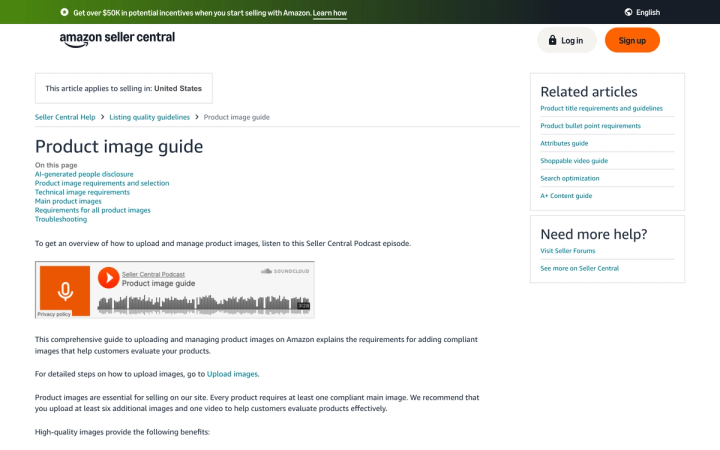
The reason this shifted is that Amazon selects and arranges images from multiple selling partners, and says outright that uploading an image does not guarantee it gets displayed. If you supply three images and a competitor supplies eight, you are not competing on quality, you are competing on whether you filled the slots at all. A listing with no compliant main image can be suppressed from search entirely.
We went deeper on the arithmetic in how many product photos you need per SKU.
What does each image slot actually need to do?
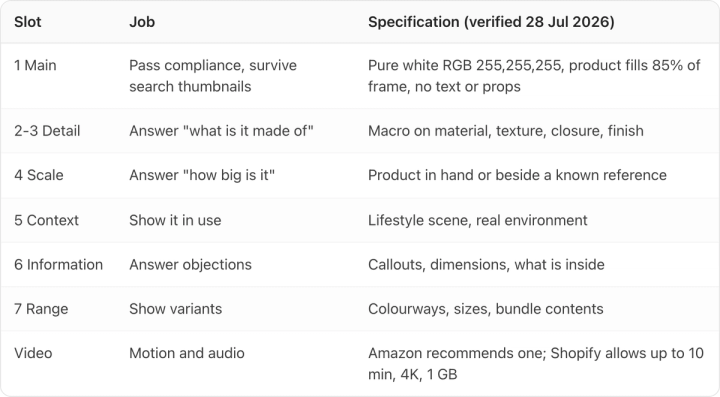
The slots are not interchangeable. Slot 1 is governed by policy; the rest are governed by conversion.
| Slot | Job | Specification (verified 28 Jul 2026) |
|---|---|---|
| 1 Main | Pass compliance, survive search thumbnails | Pure white RGB 255,255,255, product fills 85% of frame, no text or props |
| 2-3 Detail | Answer "what is it made of" | Macro on material, texture, closure, finish |
| 4 Scale | Answer "how big is it" | Product in hand or beside a known reference |
| 5 Context | Show it in use | Lifestyle scene, real environment |
| 6 Information | Answer objections | Callouts, dimensions, what is inside |
| 7 Range | Show variants | Colourways, sizes, bundle contents |
| Video | Motion and audio | Amazon recommends one; Shopify allows up to 10 min, 4K, 1 GB |
Why is the main image getting stricter while everything else gets looser?
Because Amazon uses the main image as a structural element of search, not as marketing.
The current requirements are specific. Pure white background at RGB 255, 255, 255. The product must fill 85% of the image. No text, logos, borders, colour blocks or watermarks, either over the product or in the background. No accessories or props that are not included. No packaging unless the packaging is itself a feature. Only one unit, shown once, entirely within frame.
Two rules catch people out. No mannequins of any kind — clear, solid-colour, flesh-toned, framework or on a hanger. And footwear must show a single shoe, facing left, at a 45-degree angle. Adult clothing must be on a standing model, and Amazon explicitly encourages models using assistive technology such as wheelchairs and prosthetics.
Technical floor: 500 pixels minimum on the longest side, 10,000 maximum, JPEG recommended.
None of this leaves room for art direction, which is deliberate. The creative work moved to the images nobody regulates.
Do you have to disclose AI-generated people in product images?
On Amazon, yes, if the people are entirely AI-generated and photorealistic.
This is the newest rule on the list and the easiest to miss. Amazon's guide says some jurisdictions may require disclosure when product images contain photorealistic AI-generated people, and that you must tag such an image with metadata before uploading it.
The mechanics are specific: use an IPTC-compatible metadata editor to add the keyword contains-synthetic-performer to the dc:subject (XMP) field of the image file. Amazon then adds a disclosure to the listing where applicable.
Where it does not apply is just as important, and it is narrower than people assume:
- Images featuring real people, even if altered with AI-powered tools
- Characters from films, games or other expressive works
- Images with no people in them
- People who are not photorealistic
So a retouched photo of a real model does not need the tag. A fully synthetic photorealistic model does. If you generate lifestyle imagery with invented people, this is now a production step, not a legal footnote.
Is video now part of the photography brief?
Yes, and the platforms have made it a first-class field rather than an ad asset.
Amazon recommends one video per product alongside the stills. Shopify accepts video up to 10 minutes, 1 GB and 4K (4096 x 2160), in .mp4, .mov or .webm. Shopify also supports 3D models natively — GLB and USDZ up to 500 MB, with files over 15 MB optimised automatically.
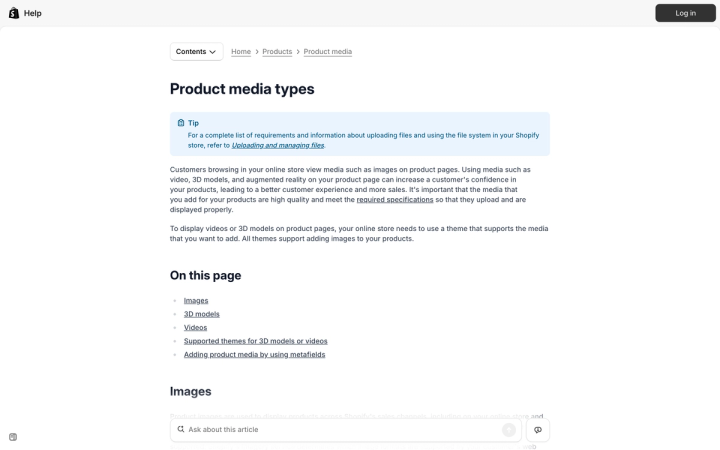
Image specs on Shopify are generous by comparison: up to 5000 x 5000 px or 25 megapixels, under 20 MB, in almost any format including WebP and HEIC.
The practical read is that a 2026 product record holds four media types (stills, video, 3D and variant imagery), and most brands are still briefing only the first.
What does this mean for how you actually produce photography?
The maths changed before the aesthetics did. Seven stills and a video across a 200-SKU catalogue is 1,400 images and 200 videos. At traditional studio rates that is not a budget line, it is a different company.
That is the pressure that pushed production toward always-on generation rather than quarterly shoot days, and it is why the tooling conversation exists at all. It is a means to the shot list, not a trend in itself.
Two things still favour a real shoot: genuinely tactile categories where material behaviour sells the product, and hero campaign imagery where the concept matters more than the catalogue. Our comparison of traditional versus AI product photography covers where each one wins, and the ROI breakdown has the cost model.
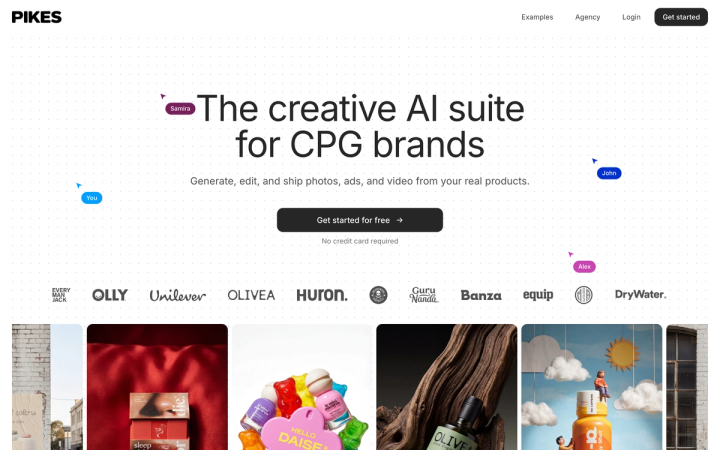
If the seven-slot shot list is what you are trying to fill across a real catalogue, Pikes works from your actual products rather than a text prompt, which is what keeps label text and packaging consistent from slot 1 through slot 7. It is free to start with no credit card.
Frequently asked questions
How many images does Amazon recommend per product in 2026? One compliant main image plus at least six additional images and one video, according to Amazon's Product image guide. A listing with no compliant main image can be suppressed from search.
What are Amazon's main image requirements? Pure white background at RGB 255,255,255, the product filling 85% of the frame, no text, logos, borders or watermarks, no props that are not included, and no mannequins of any kind. Minimum 500 pixels on the longest side, maximum 10,000, JPEG recommended.
Do I need to disclose AI-generated images on Amazon? Only for photorealistic, entirely AI-generated people. Tag the file with contains-synthetic-performer in the dc:subject XMP field using an IPTC-compatible metadata editor. Real people altered with AI tools do not require the tag.
What video specs does Shopify support? Up to 10 minutes, 1 GB and 4K (4096 x 2160), in .mp4, .mov or .webm. Shopify also supports GLB and USDZ 3D models up to 500 MB.
Is white-background photography obsolete? No. It is mandatory for the Amazon main image and is the reason the format persists. What changed is that it now does compliance work rather than persuasion work, and images 2 onward carry the conversion.
Should I shoot vertical or square for product photography? Shoot or generate at a high enough resolution to crop both. The marketplace main image is square-ish and centred; social placements are vertical. Producing one master per slot and cropping is cheaper than briefing two shoots.
Create your next product image set
Use your product photos and brand context to create studio-style and lifestyle variations in Pikes.
AI product photography with PikesCompare plans and generation credits

Written by
Mike Lehman
Mike Lehman is a senior content strategist at Pikes. Before joining Pikes, Mike spent nearly a decade working with Glossier, Haus, and Athletic Brewing, leading campaigns that blended storytelling and data.