

Mike Lehman
Mastering Shoe Photography: The Ultimate Guide for E-commerce
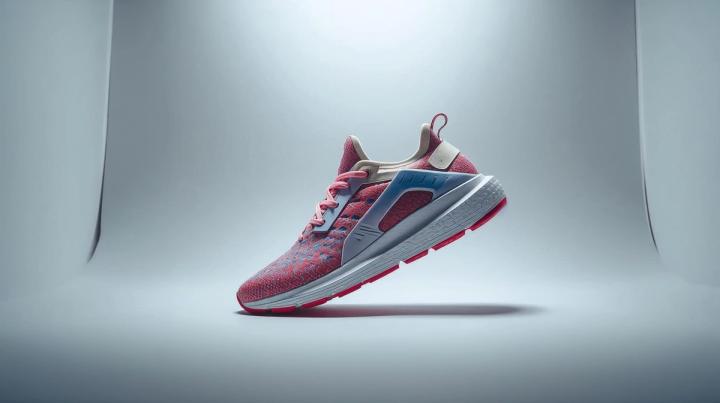
In e-commerce, a potential customer’s purchasing decision for shoes hinges on what they can see. This makes shoe photography a critical cornerstone of any successful online footwear business. Mastering the art of shoe photography is key to unlocking higher conversions, building brand loyalty, and standing out in a crowded market.
This guide will walk you through everything you need to know to create stunning, professional-grade shoe photos. We’ll cover the essential equipment for every budget, delve into lighting and composition techniques, and explore how to overcome common challenges. We will also look at the platform-specific requirements you need to be aware of and how revolutionary AI tools like Pikes.ai are changing the game. Get ready to transform your product listings and captivate your audience, one shoe at a time.
Why High-Quality Images Matter for Shoe Brands
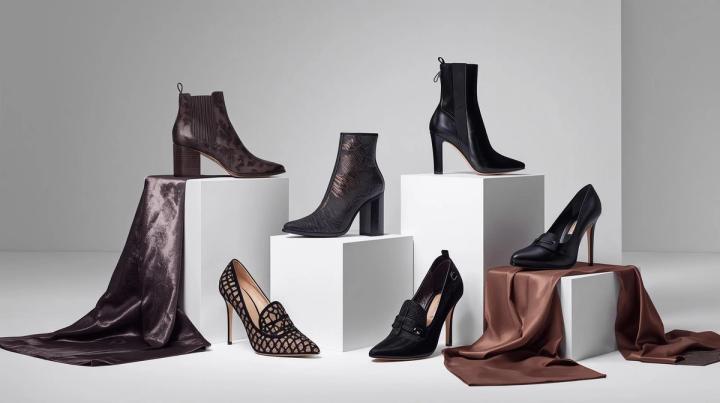
For shoe brands, a high-quality image is worth a thousand sales. The visual appeal of your products is the primary driver of customer engagement and conversion. Studies show that high-quality product photos can increase online sales conversion by 250%. The e-commerce product photography market is projected to reach US$275.4 million by 2030, growing at a CAGR of 11.6%.
Great photography does more than just present your product; it builds trust. It signals to the customer that you are a professional brand that cares about quality. It allows them to examine the intricate details of your shoes – the stitching, the texture of the materials, the craftsmanship of the sole. This level of transparency is crucial in an online environment where customers are taking a leap of faith by purchasing a product they have never seen in person. For those in the dropshipping business, compelling visuals are even more critical to differentiate your store, a topic explored in depth in The Dropshipper’s Guide to Creating Highly Converting Product Visuals with AI.
Essential Equipment
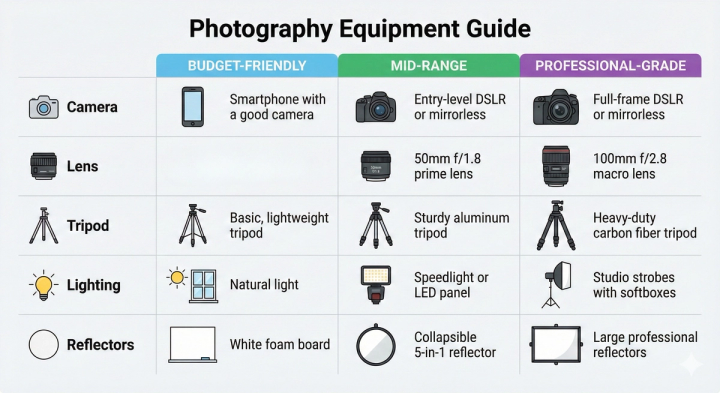
Getting started with shoe photography doesn’t have to break the bank. You can achieve professional-looking results with a modest setup. As your brand grows, you may want to invest in more advanced equipment. With modern technology, you can even skip the equipment entirely with AI-powered solutions like Pikes.ai, which can generate photorealistic images without a camera. For those who prefer the traditional route, here’s a breakdown of essential equipment across different budget tiers:
Lighting Techniques
Lighting is the most crucial element in photography. It sets the mood, defines the shape of the shoe, and highlights its textures and details. There are two main types of lighting to consider: natural and artificial.
Natural Lighting
Natural light is a fantastic and free resource for shoe photography. It creates a soft, diffused light that is flattering for most products. The best time to shoot with natural light is during the “golden hours” – the first hour after sunrise and the last hour before sunset. Position your setup near a large window and use a reflector (a white foam board will do) to bounce light back into the shadows and create a more even exposure.
Artificial Lighting
Artificial lighting gives you complete control over your environment, allowing you to shoot at any time of day or night. The most common setup is a three-point lighting system, which consists of a key light, a fill light, and a backlight. The key light is your main light source, the fill light softens the shadows created by the key light, and the backlight separates the shoe from the background, creating a sense of depth.
Common Lighting Mistakes to Avoid
- Harsh Shadows: This is often caused by a direct, unfiltered light source. Use a softbox or an umbrella to diffuse your light and create softer, more pleasing shadows.
- Inconsistent Lighting: If you’re shooting over a long period, the natural light will change, leading to inconsistencies in your images. This is where artificial lighting shines.
- Glare and Reflections: Shiny materials like patent leather can be tricky to light. Use a polarizing filter on your lens to reduce glare and experiment with the angle of your lights.
Backgrounds and Props
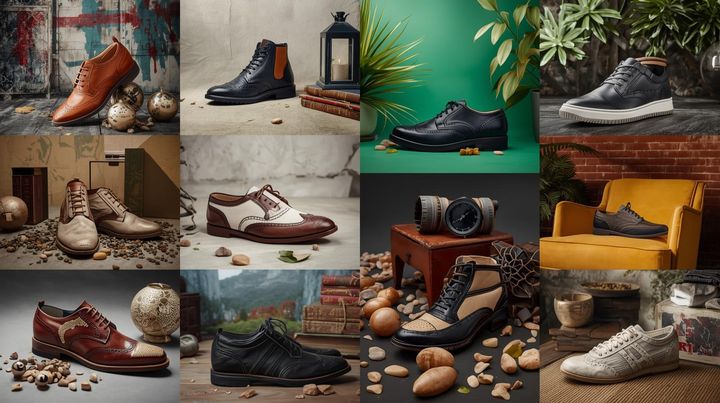
The background and props you choose play a significant role in the look and feel of your images. For e-commerce, a clean, white background is the industry standard. It’s distraction-free and ensures your product is the star of the show. For social media and marketing, you can get more creative.
Consider using backgrounds that complement the style of your shoes. For example, a rustic wooden background could work well for a pair of hiking boots, while a sleek, modern background might be better suited for a pair of high heels. Props can also help to tell a story and create a more engaging image. A pair of running shoes could be styled with a water bottle and a stopwatch, while a pair of elegant sandals could be paired with a sun hat and a beach bag.
For brands looking to scale your backgrounds with AI, services like Pikes.ai offer a revolutionary alternative. Instead of sourcing physical backgrounds and props, you can generate an infinite variety of scenes and environments with just a few clicks, a concept that is also explored in the context of Soona alternatives in this article on the best Soona alternatives.
Composition and Styling Tips
Composition and styling are the artistic touches that can elevate your shoe photography from good to great. Here are a few tips:
- The Rule of Thirds: Imagine your frame is divided into a 3x3 grid. Place your shoe at the intersection of these lines to create a more balanced and visually appealing composition.
- Leading Lines: Use lines in your composition to draw the viewer’s eye towards the shoe. This could be the edge of a table, a pattern on the floor, or even the laces of the shoe itself.
- Negative Space: Don’t be afraid to leave empty space around your shoe. This can help to create a sense of simplicity and elegance.
- Get the Right Angles: Shoot your shoes from a variety of angles to showcase all of their features. A straight-on side view, a three-quarter view, and a top-down view are all essential shots to capture.
- Stuff Your Shoes: To ensure your shoes look their best, stuff them with tissue paper or shoe trees to fill them out and remove any wrinkles.
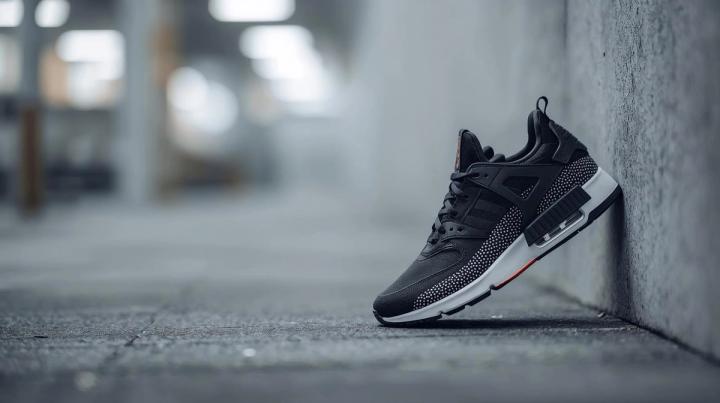
Camera Settings
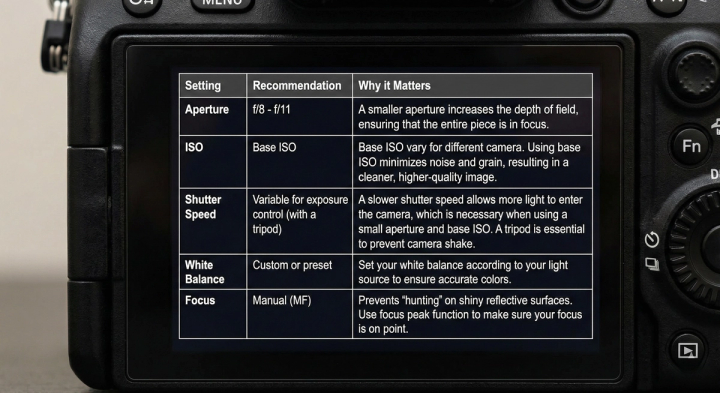
Nailing your camera settings is key to achieving sharp, well-exposed images. While the optimal settings will vary depending on your lighting conditions and the specific look you’re going for, here’s a general starting point:
Overcoming Common Shoe Photography Challenges
Even with the best equipment and techniques, you may encounter a few challenges. Here are some common problems and how to solve them:
- Achieving a Pure White Background: Getting a pure white background in-camera can be tricky. It often requires a dedicated lighting setup on the background itself. A simpler solution is to cut out the shoe in post-production, a process that can be automated with many software tools.
- Photographing Multiple Shoes Efficiently: Shooting an entire collection of shoes can be a time-consuming process. To streamline your workflow, create a consistent setup and shoot all of your shoes in one go. This is another area where AI can be a game-changer. Scaling production is a solvable challenge with platforms like Pikes.ai, which can generate an entire catalog of images in a fraction of the time.
- Dealing with Different Materials: From suede to canvas to patent leather, shoes come in a wide variety of materials, each with its own unique lighting challenges. Experiment with different lighting angles and diffusion to find what works best for each material.
Post-Production and Editing Workflow
Post-production is where you can take your images from great to perfect. The goal of editing is to enhance your images and ensure they are a true representation of your product. Basic edits include adjusting brightness and contrast, correcting colors, and sharpening the image. You may also need to remove any dust or blemishes.
There are many great editing software options available, from free tools like GIMP to industry-standard programs like Adobe Photoshop and Lightroom. For those looking to skip the editing queue, AI-powered platforms like Pikes.ai can automate the entire editing process, from background removal to color correction, saving you countless hours of tedious work. This is a powerful alternative to other AI photo editors, as detailed in this comparison of the best Pebblely alternatives.
Platform-Specific Requirements
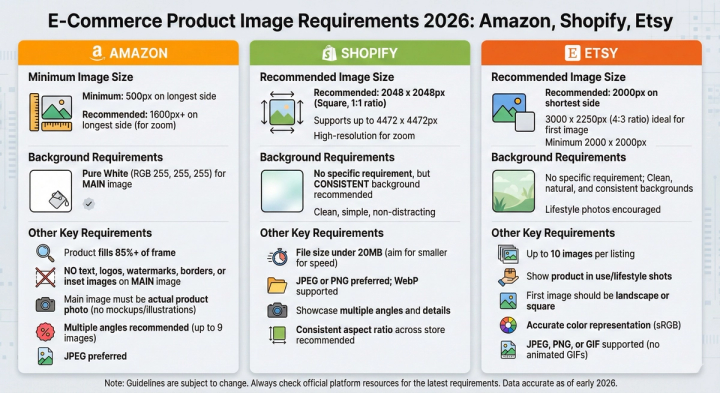
Different e-commerce platforms have different requirements for product images. It’s important to be aware of these guidelines to ensure your listings are optimized for each platform. Here’s a quick overview of the requirements for some of the most popular platforms:
How AI is Transforming Shoe Photography
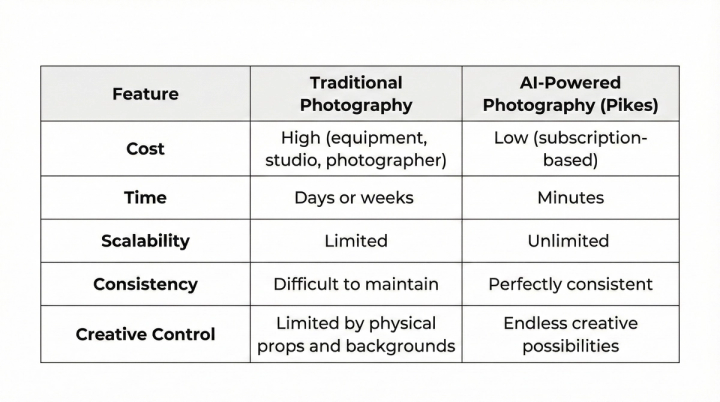
Artificial intelligence is revolutionizing product photography, and shoe brands are poised to reap the benefits. AI-powered platforms like Pikes.ai offer a faster, more affordable, and more scalable alternative to traditional photography. Instead of investing in expensive equipment and spending hours on photoshoots and editing, you can now generate an entire catalog of stunning, photorealistic images with just a few clicks. This is a significant leap forward from other tools, as highlighted in this analysis of the best Kive alternatives. Pikes.ai is a great tool for creating high-quality shoe photography.
Here’s a comparison of traditional photography versus AI-powered photography:
Conclusion
In the competitive landscape of e-commerce, high-quality shoe photography is a necessity. By investing in the right equipment, mastering the fundamentals of lighting and composition, and embracing the power of new technologies, you can create stunning visuals that will captivate your audience, build your brand, and drive sales. Whether you choose the traditional path of photography or embrace the future with AI-powered solutions like Pikes.ai, the key is to be intentional, be creative, and always put your best foot forward.
FAQ
1. What is the best camera for shoe photography?
The best camera is the one you have access to. While a professional DSLR or mirrorless camera will offer the highest quality, you can still achieve great results with a recent smartphone. The key is to understand the fundamentals of lighting and composition.
2. How do I get a pure white background for my shoe photos?
You can achieve a pure white background by lighting the background separately from the shoe. However, a simpler method is to use a photo editing software to cut out the shoe and place it on a pure white background. Many AI-powered tools can automate this process.
3. How many photos should I take of each shoe?
It’s a good practice to provide a variety of images for each product. Aim for at least 5-7 photos, including a straight-on side view, a three-quarter view, a top-down view, a back view, and a few close-up shots of the details.
4. Can I use my smartphone for shoe photography?
Absolutely! Modern smartphones have incredibly capable cameras. When paired with good lighting and a tripod, you can capture professional-looking shoe photos with your phone.
5. How can AI help with my shoe photography?
AI can help in numerous ways. It can automate the editing process, from background removal to color correction. More advanced AI platforms like Pikes.ai can even generate entire photorealistic images from scratch, eliminating the need for a physical photoshoot altogether.

Written by
Mike Lehman
Mike Lehman is a senior content strategist at Pikes. Before joining Pikes, Mike spent nearly a decade working with Glossier, Haus, and Athletic Brewing, leading campaigns that blended storytelling and data.