

Mike Lehman
The Ultimate Guide to Fragrance Photography: Capturing Scent and Style
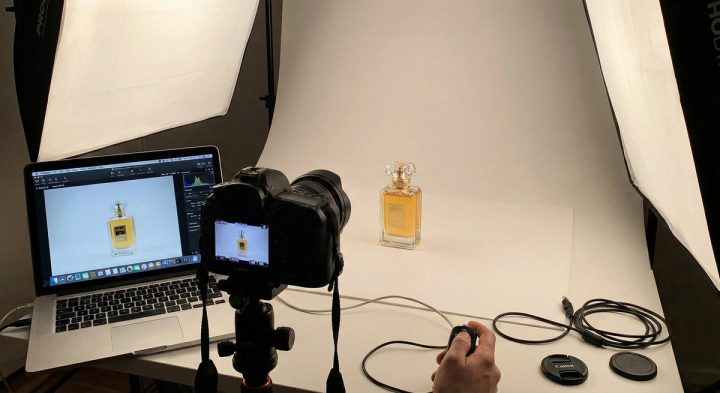
In e-commerce, high-quality imagery is essential, especially for fragrances where scent is the primary appeal. Fragrance photography translates the olfactory experience into a visual one, capturing a perfume’s essence and personality. This guide covers everything from equipment and lighting to composition and the transformative power of AI, providing you with the knowledge to create captivating fragrance images that sell.
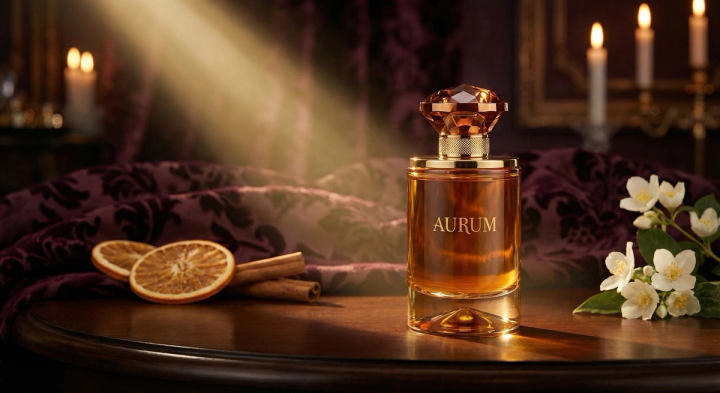
Why High-Quality Images Matter for Fragrance Brands
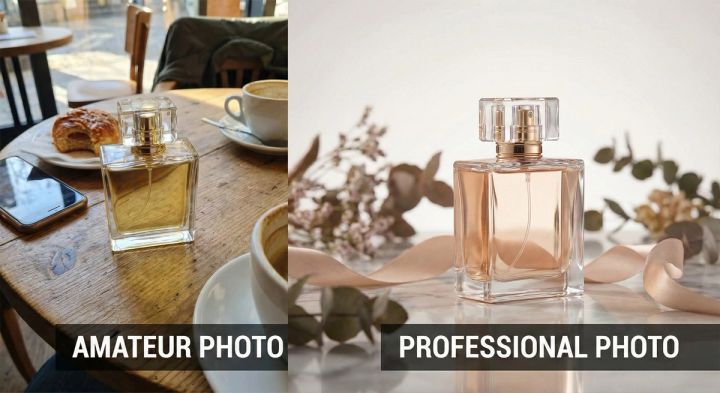
In the digital marketplace, product images are your storefront. For fragrance brands, this is even more critical as visuals must convey the scent. High-quality fragrance photography tells a brand’s story, evokes mood, and drives sales. It’s a crucial business decision that directly impacts brand perception and sets you apart from the competition.
Essential Equipment for Fragrance Photography
Investing in the right equipment is crucial for creating stunning fragrance photos. The quality of your gear directly impacts the final images. Here’s a breakdown of essential equipment by budget:
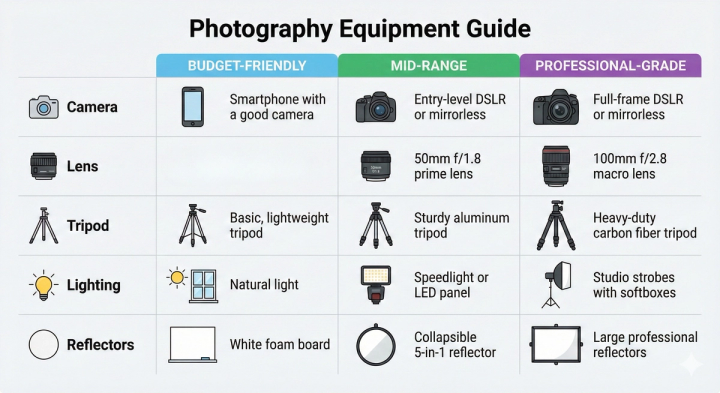
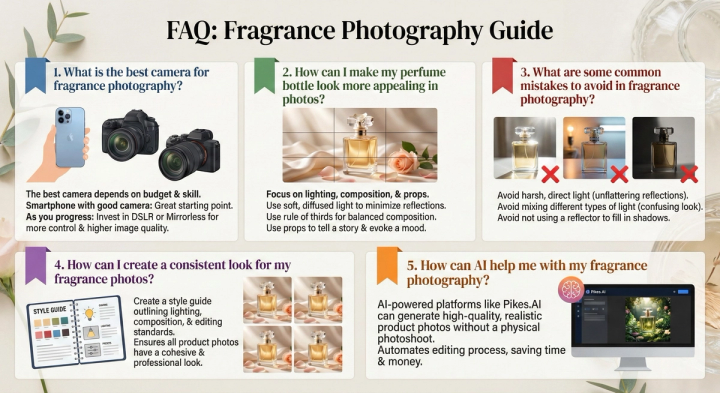
Of course, you can also skip the equipment entirely and still get professional-grade photos. With AI-powered platforms like Pikes.AI, you can generate high-quality, realistic product photos without ever picking up a camera. This is a game-changer for brands looking to create stunning visuals on a budget and at scale.
Lighting Techniques for Fragrance Photography
Lighting is the most critical element in fragrance photography, setting the mood and defining the bottle’s shape. There are two main types of lighting to consider:
Natural Light:
Natural light is a fantastic starting point for beginners. It’s soft, diffused, and free! Position your setup near a large window to take advantage of the natural light. You can use a sheer curtain to diffuse the light further and create a softer, more even look. The best time to shoot with natural light is during the “golden hour”—the first hour after sunrise and the last hour before sunset—when the light is warm and soft.
Artificial Light:
Artificial light gives you complete control over your environment. You can shoot at any time of day and create a wide range of effects. Here are a few common artificial lighting setups:
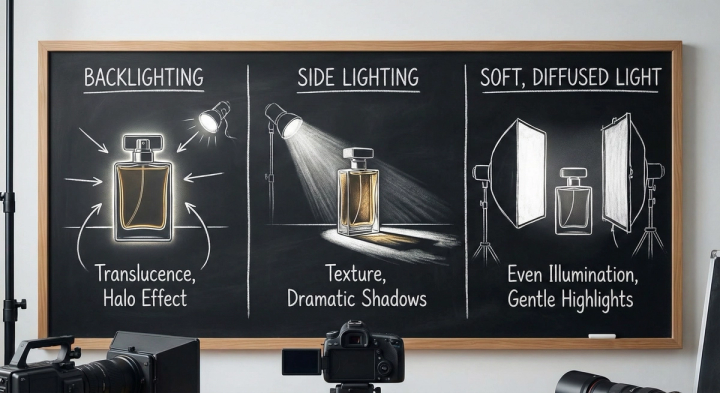
- Backlighting: Placing your light source behind the product can create a beautiful glow and highlight the color of the perfume.
- Side Lighting: Lighting from the side can create dramatic shadows and add a sense of depth and dimension to your image.
- Soft, Diffused Light: Using a softbox or an umbrella to diffuse your light source will create a soft, even light that minimizes harsh shadows and reflections.
Common Lighting Mistakes to Avoid:
- Harsh, direct light: This can create unflattering reflections and hotspots on the bottle.
- Mixed lighting: Avoid mixing different types of light (e.g., natural light and artificial light) as it can create a confusing and unprofessional look.
- Not using a reflector: A reflector is a simple but powerful tool that can be used to bounce light back into your scene and fill in shadows.
Backgrounds and Props
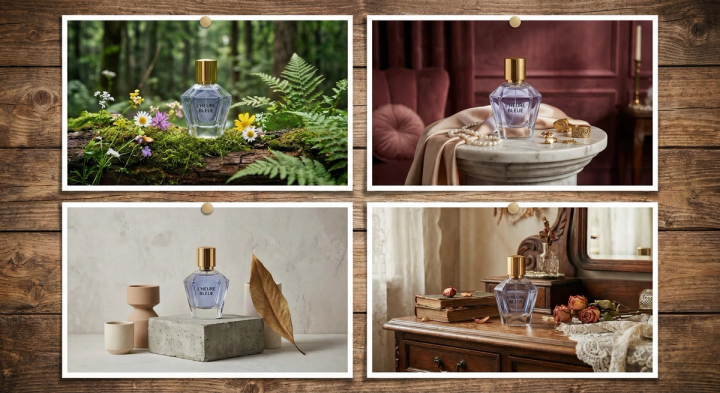
The background and props you choose are crucial for telling your fragrance’s story and should complement the product, enhancing its perceived value.
Backgrounds:
- Simple and Clean: A plain white or neutral-colored background is a classic choice that puts the focus squarely on the product.
- Textured Surfaces: Using materials like wood, marble, or linen can add a tactile element to your photos.
- Environmental Backgrounds: Shooting your product in a relevant environment (e.g., a bathroom, a vanity, or a natural setting) can help customers visualize the product in their own lives.
Props:
Props should be used to enhance the story of the fragrance, not to distract from it. Here are a few ideas:
- Ingredients: If your fragrance has prominent notes of a particular ingredient (e.g., rose, vanilla, or citrus), you can include that ingredient in your photo.
- Lifestyle Elements: Items like a silk scarf, a piece of jewelry, or a book can help to create a specific mood or lifestyle association.
- Water and Ice: Splashes of water or chunks of ice can create a sense of freshness and dynamism.
With AI, you can scale your backgrounds with AI to create an endless variety of scenes and styles. Platforms like Pikes.AI allow you to place your product in any environment imaginable, from a pristine beach to a luxurious hotel room, without the need for a physical set.
Composition and Styling Tips
Composition is the art of arranging elements for a visually appealing and balanced image. Here are some tips:
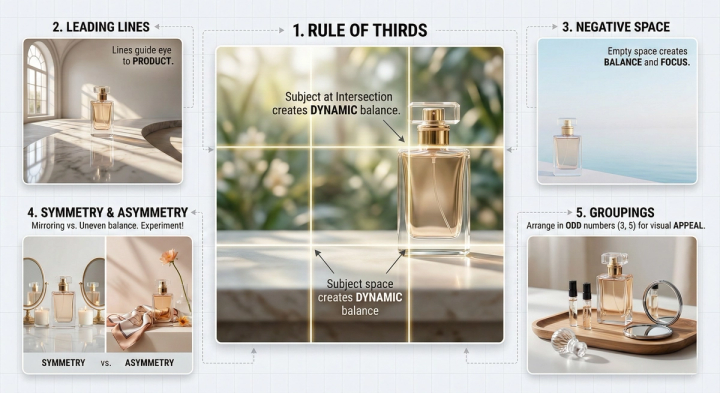
- Rule of Thirds: Imagine your frame is divided into a 3x3 grid. Place your product at the intersection of the lines to create a more dynamic and interesting composition.
- Leading Lines: Use lines in your scene (e.g., the edge of a table, a shadow, or a prop) to lead the viewer’s eye to the product.
- Negative Space: Don’t be afraid to leave empty space in your frame. Negative space can help to create a sense of balance and draw attention to the product.
- Symmetry and Asymmetry: Both symmetrical and asymmetrical compositions can be effective. Experiment with both to see what works best for your product and brand.
- Groupings: If you’re shooting multiple products, try arranging them in groups of three or five to create a more visually appealing composition.
Camera Settings for Fragrance Photography
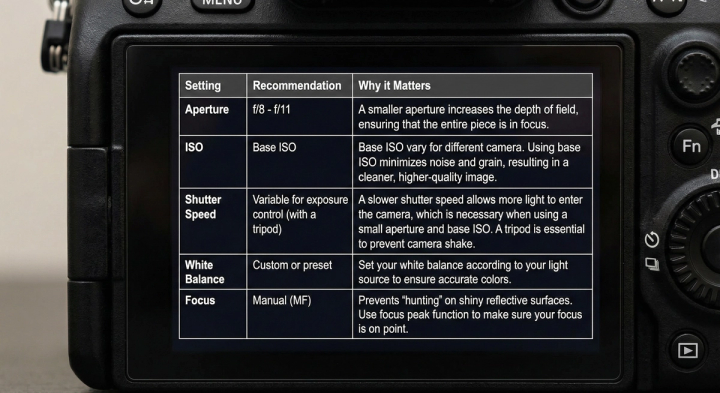
The right camera settings are essential for sharp, high-quality images. While ideal settings vary, here’s a good starting point:
Overcoming Common Fragrance Photography Challenges
Fragrance photography has unique challenges, from reflections to capturing a scent’s essence. Here’s how to overcome them:
- Reflections: Perfume bottles are notoriously reflective. To minimize reflections, use a large, diffused light source and position it carefully. You can also use a polarizing filter to cut down on glare.
- Capturing the Scent: How do you photograph a smell? The key is to use props, colors, and lighting to evoke the feeling of the scent. For example, a fresh, citrusy scent could be photographed with bright, airy lighting and props like lemon slices and water splashes.
- Consistency: Maintaining a consistent look and feel across all of your product photos is crucial for brand identity. Create a style guide that outlines your lighting, composition, and editing standards.
- Scaling: Creating a large volume of high-quality images can be a time-consuming and expensive process. This is where AI can be a powerful ally. With a platform like Pikes.AI, scaling is no longer a challenge. You can generate thousands of unique, on-brand images in a fraction of the time and cost of a traditional photoshoot.
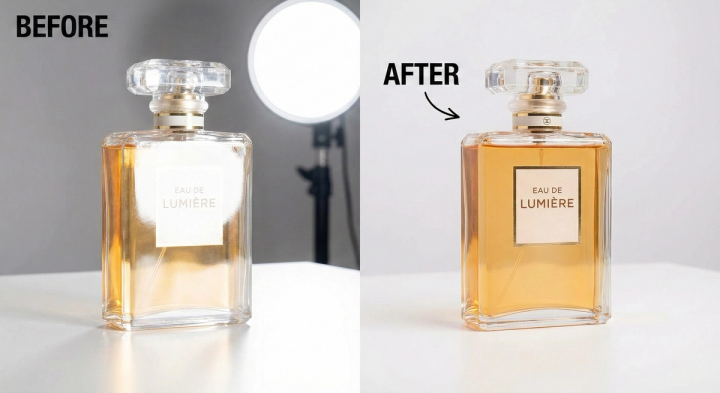
Post-Production and Editing Workflow
Post-production takes your photos from good to great. A solid workflow ensures polished, professional, and on-brand images. Here are the key steps:
- Culling and Selection: The first step is to go through all of your images and select the best ones. Look for sharp, well-composed shots that effectively capture the essence of the fragrance.
- Basic Adjustments: In your editing software of choice (e.g., Adobe Lightroom or Photoshop), make basic adjustments to exposure, contrast, and white balance.
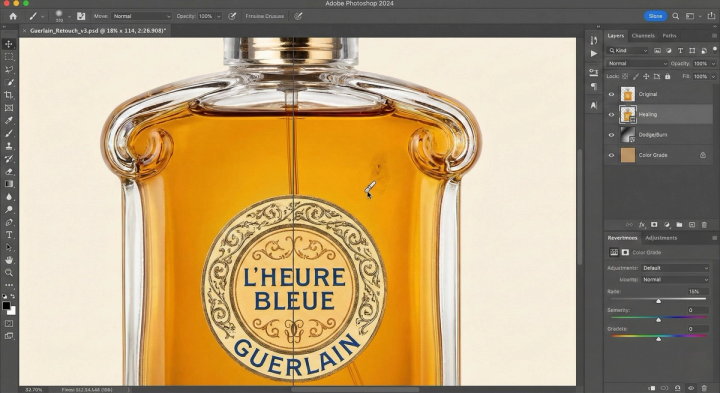
- Retouching: This is where you can clean up any imperfections, such as dust, scratches, or unwanted reflections. The goal is to create a clean, polished look without making the product look unrealistic.
- Color Grading: Color grading is the process of adjusting the colors in your image to create a specific mood or feeling. This is a powerful tool for enhancing the story of your fragrance.
- Sharpening and Exporting: The final step is to sharpen your image for the web and export it in the appropriate format and size.
Of course, you can skip the editing queue altogether with AI. Tools like Pikes.AI can automate the entire editing process, from basic adjustments to complex retouching, saving you hours of tedious work.
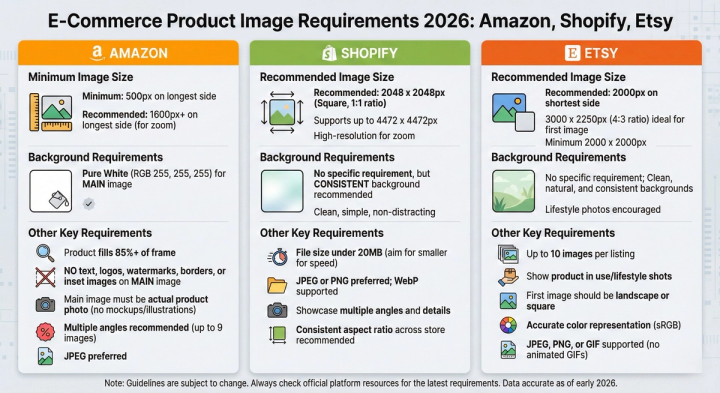
Platform-Specific Requirements for Fragrance Photography
Different e-commerce platforms have different image requirements. It’s important to know these to ensure your photos display correctly. Here’s an overview for popular platforms:
How AI is Transforming Fragrance Photography
Artificial intelligence is revolutionizing product photography, including the fragrance industry. AI platforms make creating high-quality product images easier and more affordable. Here’s a comparison of traditional versus AI-powered workflows:
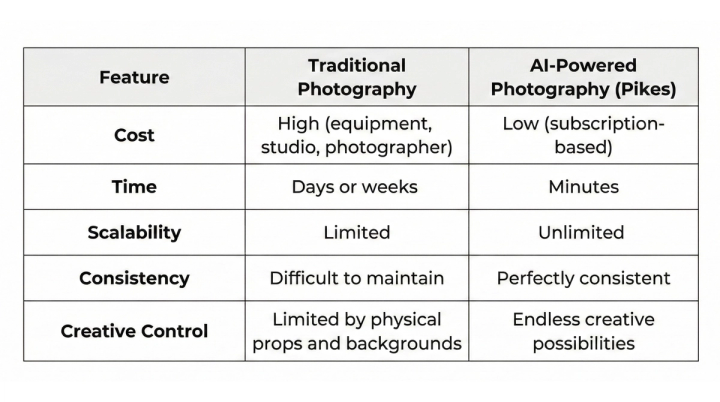
AI is not just a tool for creating images; it’s a strategic partner that can help you to elevate your brand and grow your business. By embracing AI, you can create a more efficient, cost-effective, and creative workflow for your fragrance photography. For more on this, check out these resources on Pebblely alternatives and Kive alternatives.
Conclusion
In the competitive e-commerce landscape, high-quality fragrance photography is a necessity. This guide has provided a comprehensive roadmap to creating captivating fragrance images that sell. By investing in your product photography, you are investing in your brand and its success. Ready to elevate your fragrance photography? Try Pikes.AI for free and discover the power of AI-generated product photos.
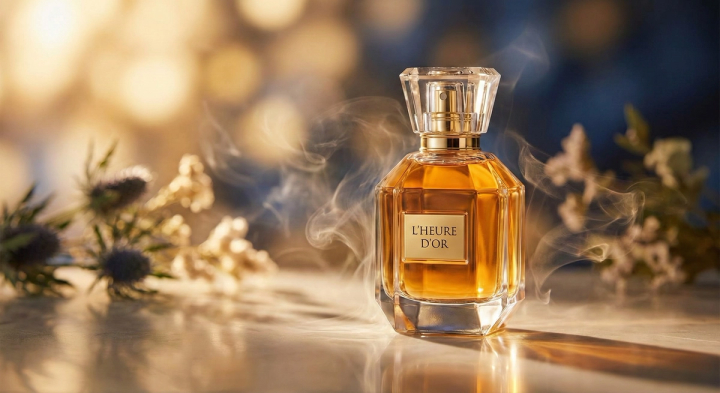
AI can help you with your fragrance photography in a number of ways. AI-powered platforms like Pikes.AI can help you to generate high-quality, realistic product photos without the need for a physical photoshoot. They can also help you to automate the editing process, saving you time and money.

Written by
Mike Lehman
Mike Lehman is a senior content strategist at Pikes. Before joining Pikes, Mike spent nearly a decade working with Glossier, Haus, and Athletic Brewing, leading campaigns that blended storytelling and data.